An Islamic View on Plant-Based Diets and Vegetarianism/Veganism | Karyawan
An Islamic View on Plant-Based Diets and Vegetarianism/Veganism
Dr Muhammad Haniff Hassan
27 Feb 2026
11 min read
Dietary choices have become a prominent marker of personal ethics and social consciousness in recent times. In recent years, plant-based lifestyles, including vegetarianism and veganism, are increasingly embraced by younger generations, including many young Muslims. The growing interest in vegetarianism and veganism makes this a relevant global issue that warrants guidance from contemporary Muslim scholars. Such guidance is vital to help young Muslims adopt a balanced approach to diet consistent with Islamic principles, avoiding both tafrit (excessive restriction) and ifraṭ (excessive leniency).1
Before proceeding further, it is important to define vegetarianism and veganism. Vegetarianism refers to a dietary practice or lifestyle that involves consuming only plant-based foods.2 Veganism, while similar in principle, adopts a stricter stance. Vegans avoid not only meat, but also all animal-derivative products such as milk, eggs, and honey.3
Qur’anic References to Fruits and Plants
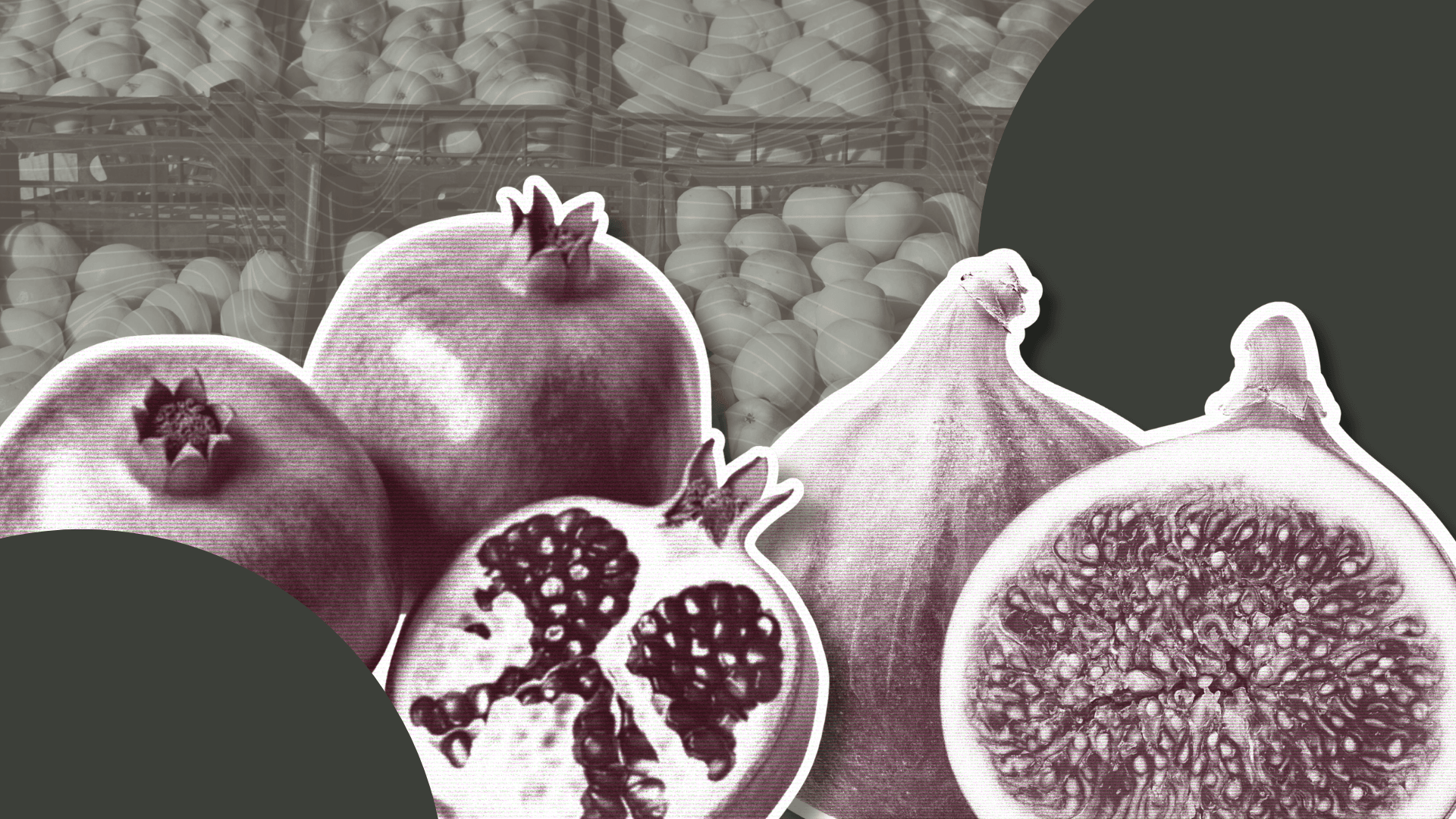
The Qur’an frequently highlights fruits as both a worldly provision and a form of sustenance promised in Paradise. The existence of fruits, grains, and vegetables in different verses demonstrates that the Qur’an accords significant attention to them.4 Many Qur’anic verses reference fruits before meat when mentioning them as God’s ni`mat (bounty) to humankind, whether in this world or in Paradise. This textual pattern suggests that the Qur’an favours fruits and plants as the primary sources of food, compared to meat. There are also many Qur’anic verses that mention fruits alone as food for humankind, both in this world and in the hereafter. This further indicates the prominence and importance of plant-based foods over meat. While these reflections do not deny the established permissibility of meat in Islam, it does invite a closer appreciation for the value placed upon fruits and plant-based foods.
References
1.Foltz, R. C. (2006). Animals in Islamic tradition and Muslim cultures (pp. 110–114). OneWorld;Dahlan, M. (2021). Veganism in Islam. In L. Wright (Ed.), Routledge handbook of vegan studies (pp. 226–233); Routledge;Zaki, M. N., Jamaludin, M. A., Mohd Nor, N. S., & Azlan, A. (2021). Veganism sentiments and preferences among Muslims. Pertanika Journal of Social Sciences & Humanities, 29(2), 1431–1447;Adam, J. (2018). Meat and Islam: How vegetarians in Egypt navigate faith and contemporary food ethics (Master’s thesis). Harvard Extension School. []
2.Wright, L. (2021). Framing vegan studies: Vegetarianism, veganism, animal studies, eco-feminism. In L. Wright (Ed.), Routledge handbook of vegan studies (pp. 3–5). Routledge;Encyclopaedia Britannica. (2022, November 23). Vegetarianism. EncyclopaediaBritannica. https://www.britannica.com/topic/vegetarianism;Shaikh, Z. (2020). Towards an Islamic basis for veganism. Astrolabe, 2, 129.[]
Classical jurists generally affirmed the permissibility and virtue of eating meat based on Qur’anic verses that describe meat as one of the foods enjoyed by the inhabitants of Paradise.8 Scriptural references also highlight the central role of making the qurban (ritual sacrifice of livestock such as camels, goats, and cattle) and sharing the meat.9 Additionally, there are narrations that the Prophet Muhammad, peace be upon him (pbuh), ate meat whenever he had the opportunity to do so.10 Thus, there is clear permissibility of consuming meat.
Nevertheless, Islamic tradition has also emphasised the value of moderation in meat consumption, in particular among Sufis (practitioners of tasawwuf), who often prioritise plant food sources and avoid eating meat.11 A well-known statement from Caliph Umar, may Allah be pleased with him (r.a)., as narrated by Imam Malik in al-Muwatta’, cautioned against excessive eating of meat: “Beware of eating meat, for it produces addiction similar to that of wine.”12Caliph Umar r.a advised against the habitual and excessive consumption of meat because it leads a person to increase both the quantity and frequency of consumption, which in turn may cause obesity and health problems. Moreover, given the high price of meat, it could also result in a monopoly of meat supplies by the wealthy. Hamzah Yusuf explains that by limiting the frequency of meat consumption, Caliph Umar r.a. ensured there was greater access for the wider community.13 This understanding is supported by another narration where Caliph Umar forbade the public from eating meat on two consecutive days during his rule. He also once reprimanded a man for eating meat daily.14
The Prophet’s (pbuh) daily diet has also been described by some as “semi-vegetarian.” His own ascetic character (zuhd) led him to live simply, including in his daily meals. Historically, meat was considered a luxury for most ordinary people in early Islamic society. Hence, a “semi-vegetarian” diet was the lived experience of many early Muslim communities in general.15
The hadith reporting the Prophet’s (pbuh) fondness for tharid,16 a dish sometimes prepared with meat, should not be interpreted as proof of the superiority of meat over fruits and vegetables. Tharid could be made entirely from plant-based ingredients or a mixture of meat and vegetables. As such, using this narration to proritise a meat-based diet over plant-based consumption reflects later scholarly interpretation rather than an explicit religious directive.
Some may also assume that textual references in the Qur’an and hadith regarding meat indicate a superior status over vegetables and fruit. However, there are no definitive and explicit Qur’anic evidence that meat is more virtuous, merely that it is permissible. The hadith often cited — “The most excellent food for the people of this world and Paradise is meat” — has been classified as weak (da`if) by many hadith scholars. Discourse over the superiority of either a meat-based or plant-based diet therefore remains interpretive, shaped by broader ethical, social, and historical considerations.
There are also historical precedents rooted within the Islamic tradition, such as the practices of Caliph Umar r.a and Prophet Muhammad (pbuh) that exemplify a balanced attitude towards dietary preferences—favouring moderation in meat consumption due to concerns like overindulgence and resource equity, rather than religious prohibitions on permitted meats.17
During the Prophet’s (pbuh) era, a companion known as Abu al-Lahm al-Ghifari was recognised for his avoidance of meat. There is the commonly assumed Arabic kunyah (titles), where “Abu” means “father of”, such as Abu al-Qasim (“father of al-Qasim”) or Abu Musa (“father of Musa”). However, Abu al-Lahm means “the one who avoids meat”, not “the father of meat” as one would assume. Scholars have differed regarding the reason for his title. Some referred to his great fondness for meat; while others maintained that it described his refrain from eating meat. A third view holds that he refused to eat meat sacrificed to idols. The second opinion is the most widely accepted, while the third is weak, since abstaining from meat sacrificed to idols is already a Qur’anic obligation for all Muslims, and thus could not have been a reason for his distinctive title.18
Abu al-Lahm is also listed among the narrators of hadith.19 Biographical records on the companions of the Prophet (pbuh) contain no record of criticism of his character for the dietary habit that earned him this title. Scholars of hadith who studied the backgrounds of narrators did not make any negative remarks that would discredit his reliability or weaken his narrations.20
A similar example is found in the early Islamic period with Zahdam al-Jarmi, who swore never to eat chicken because he regarded it as unclean.21 Even after being informed that the Prophet (pbuh) himself ate chicken, there is no record of him being censured for this personal choice. This illustrates Islam’s tolerant attitude towards an individual’s dietary preferences within the religious boundaries explicitly stated in the Qur’an and Sunnah.
Islamic Permissibility, and Vegetarianism/Veganism
Among vegetarians and vegans, the consumption of animal-based food is often regarded as “forbidden” or morally objectionable. This stance marks a key distinction between Islam and these ideologies. While the Qur’an encourages the consumption of fruits and plants, it explicitly forbids Muslims from declaring the eating of meat as unlawful.22 The permissibility of meat consumption is clearly established through clear religious evidence and upheld by a well-established consensus (ijma`) among Muslim scholars.
Furthermore, the Qur’an repeatedly warns against declaring unlawful (haram) what God has made lawful (halal).23 Numerous verses affirm that the authority to declare things lawful or unlawful belongs solely to God, and that human beings have no right to legislate contrary to His decree. A Muslim who personally chooses to abstain from eating meat, without believing or declaring it religiously forbidden for themselves or others, is not committing a sin in Islam. Eating meat is permissible, not obligatory. Therefore, choosing to refrain from a permissible act, without deeming it unlawful, incurs no sin and is not condemned by religion.24
The Qur’anic encouragement to consume fruits and plant-based diet can be understood as a recommendation to increase one’s intake of such foods, or to give them priority over meat, rather than a command to completely abstain from meat. Nonetheless, should a Muslim choose to go further by completely avoiding meat and all animal-based products, this choice is not considered sinful, provided that the products are religiously permitted.
It is important to note that this approach does not imply any disapproval or prohibition of diets that include meat. The Qur’an and hadith clearly permit the consumption of meat and its products.25 Hence, meat consumption carries neither reward nor sin, nor is it disliked (makruh) by God. Scholars likewise confirm that this permissibility also extends to fish.26
Finally, Muslims who adopt a plant-based lifestyle, whether vegetarian or vegan, must avoid self-righteousness and the belief that they are morally or spiritually superior compared to those who eat meat. The Qur’an condemns such attitudes of arrogance.27
Since neither Islamic tradition nor Islamic law establishes firm preference for either diet, Muslims are permitted to consult credible, beneficial sources beyond religious texts. After all, the Qur’an teaches us that knowledge and wisdom are granted by God to whomever He wills in various fields, not just for scholars of religion. Nutritional science may therefore guide Muslims in this endeavour and serve as a possible basis of tarjih (weighing preference) in favour of a fruit and plant-based diet when making dietary choices.
Nutritional Science on Plant-based Diets
According to modern nutritional science, fruits and vegetables contribute essential vitamins, minerals, fibre, and essential phytochemicals that support good health and preventing disease.28 Extensive research has shown that diets rich in whole, plant-based foods are strongly linked to the prevention and management of chronic illnesses such as cardiovascular disease, type 2 diabetes, hypertension, and certain cancers. Fruits and vegetables also help to lower blood sugar levels, healthier metabolic outcomes, and prevent obesity because the low sugar content keeps one feeling satiated, thereby reducing the tendency to overeat.29
In contrast, excessive consumption of red meat - such as beef, mutton, including processed meats such as sausages, ham, and bacon - has been linked to toxins that damage blood vessels, and increase the likelihood of heart disease and diabetes.30 Western-style processed food and lower vegetable intake among younger generation has been correlated with declining health outcomes and lower life expectancy.31 These observations show that prioritising plant-based foods, even without full avoidance of meat, can yield tangible health benefits.
While mainstream nutritional wisdom agrees there are advantages of a plant-based diet, it does not advise complete abstention from meat. A person who adopts an entirely plant-based diet may still practise unhealthy eating habits that might affect their physical well-being.32 The consensus recommends a balanced diet that includes elements of fruits, plants, and meat, ideally represented in the form of a plate where meat constitutes only about 25 per cent, while fruits and vegetables make up the greater portion.33
Research on the Okinawa Diet reinforce this view. The Okinawan people are known for their longevity and good health. They historically consume a traditional diet with significantly more fruits and vegetables than meat. Their daily meat intake is low, averaging around 90 grams. Studies have also shown that life expectancy declines when daily meat consumption exceeds 100 grams.34
Conclusion
An emphasis on plant-based diets, and a refrain from overconsumption of meat represent an intersection of nutritional science, environmental sustainability, and Islamic faith. The Qur’anic encouragement for Muslims to consume fruits and plants reflects a harmony between Islamic teachings as well as the ethical and environmental principles of vegetarianism and veganism. The insight drawn from the Qur’anic references to plants, supported by contemporary scientific research and nutritional sciences, suggests an encouragement for Muslims to prioritise fruit and vegetables as part of a healthy diet.
Islam accords preference to fruit and vegetables over meat as sources of nourishment. There is no wrongdoing on the part of a Muslim who chooses to adopt a plant-based diet as a personal preference, so long as they do not believe that eating meat is religiously prohibited for themselves or other Muslims, and they do not consider themselves more pious in God’s sight than those who do eat meat.
Qur’anic references to fruits and vegetables can also be understood within a broader framework of food security and environmental sustainability. By reducing our reliance on resource-intensive livestock production, the Muslim community can lessen the pressure on ecological systems, reduce greenhouse emissions, and free up land and water for more equitable food distribution. Islam promotes moderation, health, and responsible consumption as part of a Muslim’s stewardship (khilafah) over both body and the environment.
Adapted from Tafsir `Ilmi Ayat-ayat Kauniyat MABIMS – Tumbuh-tumbuhan (MABIMS scientific commentary of the Qur'an series: Verses on plant), by M. H. Hassan, 2023, MABIMS.
About the Author
Muhammad Haniff Hassan is a Fellow at S. Rajaratnam School of International Studies Nanyang Technological University Singapore. He can be contacted at [email protected] and www.haniff.sg
9.Batchelor, D. A. F. (2019). Islamic perspective on reducing meat consumption to promote Earth's sustainability. Islamic Civilizational Renewal, 10(2), 164–167;Mahmood, A., Ahmad, S., & Carmichael, A. R. (2020, July 29). Is meat consumption essential for healthy diet? An Islamic perspective. The Review of Religions.https://www.reviewofreligions.org/23928/veganism-vegetarianism-meat-consumption-islamic-perspective/.[]
10.al-Bukhari. Sahih al-Bukhari. Hadith No. 5419; Ibn Majah. Sunan Ibn Majah. Hadith No. 3308; Malik. al-Muwatta’. Kitab al-Taharah. Book 2. Hadith No. 49; Muslim. Sahih Muslim. Hadith No. 354a. []
11.Ali, K. (2015). Muslims and meat-eating: Vegetarianism, gender and identity. Journal of Religious Ethics, 43(2), 271–275;Al-Qudsi, A. S. (2019). The spiritual culture of food: Eating customs in early Sufism. Acta Orientalia Academiae Scientiarum Hungaricae, 72(4), 420–431;Batchelor, D. A.-F. (2019). 167-168;Ibn Atiyyah Al-Makki. (2005). Qut al-Qulub fi Mu`alamat al-Mahbub wa Tariq al-Murid ila Maqam al-Tawhid (Vol. 2). Dar al-Kutub al-`Ilmiyah. 290, 315; Ibn Al-Jawzi. (2001). Talbis Iblis. Dar al-Fikr. 136, 178, 187. []
18.Ibn `Abd al-Bar. (n.d.). Al-Isti`ab fi Ma`rifat al-Asḥab (Vol. 1). Dar al-Jayl. 7; Ibn al-Athir. (n.d.). Usud al-Ghabah fi Ma`rifat al-Saḥabah (Vol. 1). Dar Ibn Ḥazm. 135-136.[]
31.Miyagi, S., Iwama, N., Kawabata, T., & Hasegawa, K. (2003). Longevity and diet in Okinawa, Japan: The past, present and future. Asia Pacific Journal of Public Health, 15 (Suppl. 1), 51–59. []
34.Miyagi, S., Iwama, N., Kawabata, T., and Hasegawa, K. (2003, March) Longevity and Diet in Okinawa, Japan: The Past, Present and Future. Asia Pacific Journal of Public Health 15(1). Supplement. 51-59;Willcox, D. C., Willcox, B. J., & Suzuki, M. (2009). The Okinawan diet: Health implications of a low-calorie, nutrient-dense, antioxidant-rich dietary pattern low in saturated fat, sodium, and added sugars. Nutrition Reviews, 67(5), 264–275. []