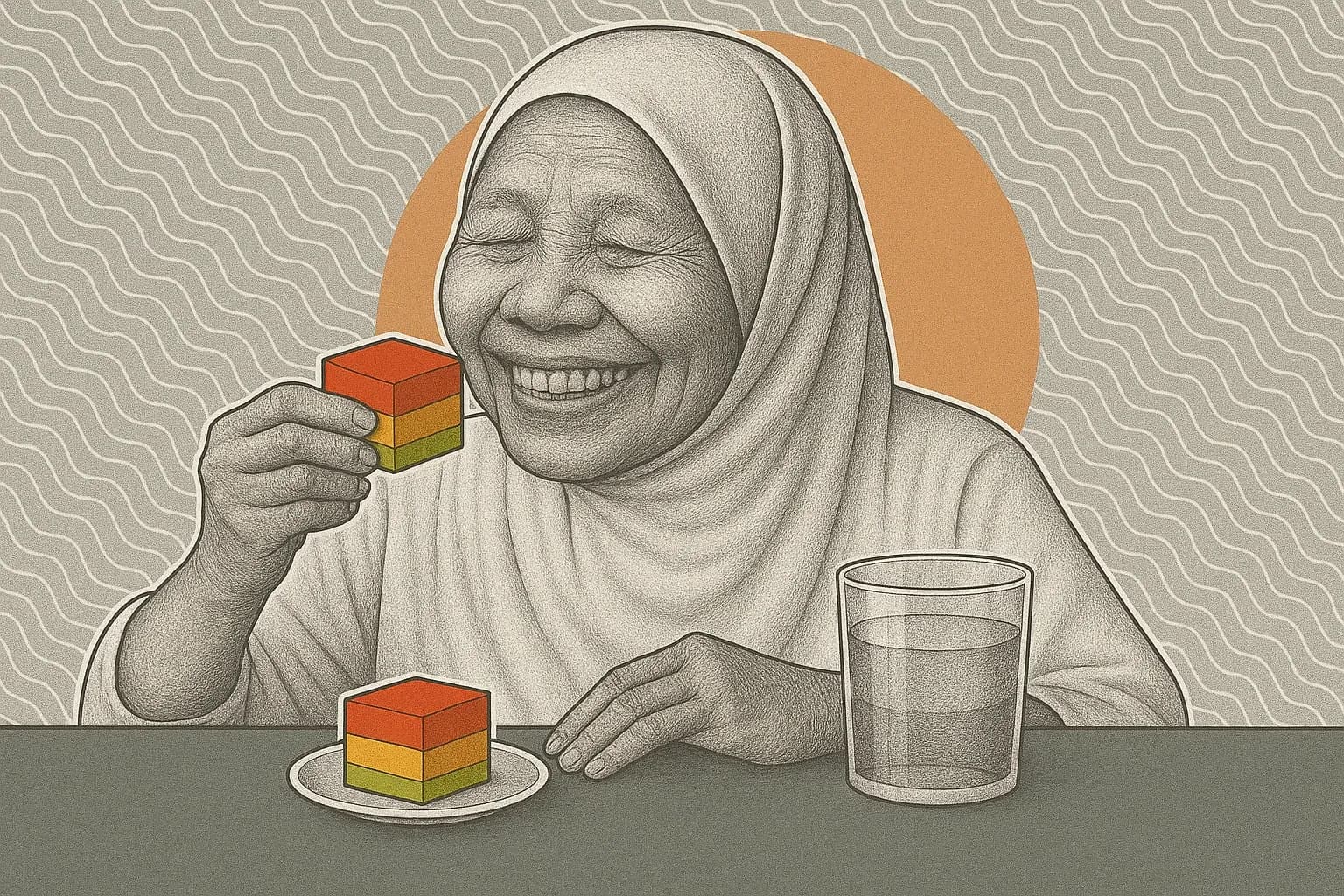
Live to 100: Secrets of the Blue Zones on Netflix referenced Singapore as the last and final Blue Zone — described as regions on Earth where people live the longest1. While the Covid-19 pandemic regressed a decade’s progress made in improving healthy longevity, reflected in the dip in Singapore’s life expectancy between 2020 and 2023, Singapore now boasts one of the highest life expectancies in the world, at 83.5 years, according to the data published by the Singapore’s Department of Statistics2.
Regardless of whether one believes in the science of the Blue Zones, it is nice to see Singapore make this list ahead of other countries who might measure higher in life expectancy – this assurance of having done something right. Live to 100 expands on how those in Blue Zone regions prioritise not just individual acts such as one’s physical activity or diet, but community, purpose and accessibility. In short, the environment that one is in matters.
One of the more interesting findings is that people in Blue Zones still enjoy eating delicious food, with their diet consisting of plant-based ingredients like whole grains, greens, tubers, nuts, and beans. It is also as much about the practices surrounding the food. They eat with family, and they slow down when eating because they have conversations over their food. The Okinawans, belonging to a Blue Zone region, have a saying that reminds them to stop eating when their stomachs are 80% full. This practice of being economical with food also exists in Islam, in a hadith that states:
Miqdam bin Madikarib said:
“I heard the Messenger of Allah (PBUH) say: ‘A human being fills no worse vessel than his stomach. It is sufficient for a human being to eat a few mouthfuls to keep his spine straight. But if he must (fill it), then one third of food, one third for drink and one third for air.’” (Sunan Ibn Majah 3349)
This conversation around food brings us to an important takeaway from a recent webinar by the Centre for Research on Islamic and Malay Affairs (RIMA) on health and advocacy, which was to not weaponise food or reinforce the idea that the cultural food that we eat is inherently unhealthy. Perceptions on the unhealthiness of our cultural food is already pervasive in the media. The social media copy of a Straits Times article in 2015, posted on Facebook, states: Malay food is known almost as much for its deliciousness as for its high sugar and cholesterol content. Here are some tips and recipes for cooking healthier versions of popular Malay dishes3. Another headline in 2017, on Today, is called War on diabetes: Changing eating habits of Malay, Indian communities an uphill task4. In 2021, a cafe called The Ritual received backlash for an Instagram post that promoted their ‘healthier’ version of Nasi Padang - without MSG or additives and only uses Himalayan salt – with the caption being “Nasi Padang without the nasties. Eat guilt- free"5. Bar their intentions, the connotation of the word ‘nasties’ did not bode well with many netizens who took to calling out the cultural insensitivity of the statement, which suggested that Nasi Padang was unhealthy and hence there was a need to ‘eat guilt free’.
This thinking is ingrained in the narratives that we tell ourselves. As Davidson highlights, “We think in mental models. Narratives are central to the mental models and social beliefs and practices that guide individuals’ decision-making and behaviour, and thus narrative is an important tool for bringing about change.”6 In the headlines above, War on Diabetes is a narrative that was brought to the national consciousness in the 2017 National Day Rally where former Prime Minister Lee Hsien Loong raised diabetes as a national problem. He said in his vernacular speech, “What is more worrying is that 17% of Malays suffer from diabetes. One of the factors is obesity, that is also more serious among the Malay population.” He went on to suggest that one of the ways to improve the situation is to be more mindful of what the community consumes, saying, “Malay food is delicious because of the fat content. Unfortunately, that fat comes from coconut cream (santan) and sugar.”7 In efforts to tackle what was supposed to be perceived as a national problem, we began to employ a racial lens to the issue.
In trying to explain the reason for the shift in the national narrative in relation to race-related discourse vis-a-vis health, Bin Khidzer (2024) discusses this racialised perspective in his article Sickly, Idle, and Risky Minorities. He writes that the Singapore government had been considering a universal health insurance system alongside a concept called “risk pooling”8. This meant the introduction of the mindset of “higher medical costs of the less healthy are offset by the lower cost of the healthy” into political discourse. He further argues that the prevalence of diabetes among minorities matters more under this narrative because risk pooling affects everyone involved. This is evident in public health discourse that we still see today, where programmes are executed to manage minority bodies through ethnic, community-based organisations and solutions. We observe yearly health campaigns targeted at the Malay community by the Health Promotion Board (HPB), namely, Korang OK?, that touches on five aspects: food, smoking, health screening, mental well-being, and staying active. Nearing the Ramadan and Syawal1 periods, HPB has also rolled out public education campaigns to promote healthy eating and lifestyle habits in the Malay/Muslim community9. In particular, they aim to encourage the community to consume less sugar and choose healthier food options, with its tagline “Kita dah cukup manis, kurangkan OK?” (We are sweet enough, reduce OK?) . Especially in the Syawal period where everyone is looking their best in their Eid outfits, the cheesy pick-up line that alludes to one being “sweet enough” increases the memorability of the message.
This public health discourse also extends to parliamentary proceedings, where “poor health habits” and “cultural preferences” were cited in 2021’s Ministry of Health’s Committee of Supply Debate to justify culturally relevant programmes10. There has been pushback with regard to this racialised framing, with the argument being that minority health points to a larger issue of public health equity. Many support a social determinants of health approach as an alternative. Instead of arguing that Malay people are more prone to diabetes “just because they are Malay and Malay people participate in so-and-so unhealthy behaviours despite seemingly having genetic predispositions to certain illnesses”, this approach asks:
“How do historical and current social structures, policies, and experiences tied to being Malay in Singapore, that may include factors like housing, healthcare, employment opportunities, access to nutritious food, experiences of discrimination, cultural norms around food, contribute to different exposures to risk factors for diabetes compared to other racial groups?"
The higher rates of diabetes are therefore not a racial problem, but rather a complex issue stemming from various interconnected social, economic, and environmental factors that may disproportionately affect the minority community. A 2004 research study published in the Singapore Medical Journal on differences among Chinese, Malay, and Indian patients with Type 2 Diabetes in Singapore found that there were ethnic differences in BMI, diabetic control, and family history of diabetes mellitus. However, they also concurred that ethnic differences in control of diabetes could have been affected by factors not looked into in the study, such as one’s socio-economic status or insulin sensitivity, among others. Additionally, because the study was already framed according to the CMIO model, further recommendations would of course be racial in nature, with the authors suggesting that “Malays in particular should be targeted in strategies on lifestyle changes to prevent the onset of obesity. Dietary advice and cooking tips could be tailored to the preparation of Malay food. As more Indians have a positive family history of diabetes mellitus, they should be encouraged to come forward for screening for diabetes mellitus.”11
Ultimately, while genetic predispositions do exist and can be more common in populations with shared ancestry, race in itself is not a biological determinant of disease. After all, race, as we know, is a social construct. Proponents of social determinants of health raise a few questions on the sustainability of race-based public health policies as well, including the upward trend of interracial marriages and mixed cultures in Singapore that may deem these rigid categorisations of CMIO irrelevant in the future. There is also concern over the cost of insurance for minority groups that may increase, given that the gender-based approach has already penalised women to pay higher premiums for CareShield Life12.
There is a need to re-examine at how we look at data. While public discourse in Singapore has always taken highly racialised forms, and pinning certain health-related issues on race makes explaining and the enrolment of ‘targeted’ programmes easier, the oversimplification of the issue has brought to the fore negative narratives of certain segments of society, that may ultimately be detrimental to the nation’s social cohesion. That said, of course, the onus is on each individual, regardless of race, to ensure that their own health is taken care of. This includes taking care of one’s diet (everything in moderation!), participating in physical activity, and active health screenings - living up to our mantle of belonging to a Blue Zone.
Nur Izzatie Adnan is currently a Research Analyst at the Centre of Research on Islamic and Malay Affairs (RIMA). She completed her undergraduate studies in Sociology at Nanyang Technological University, where she was able to cultivate her love for unpacking and diving deep into different cultural phenomena.