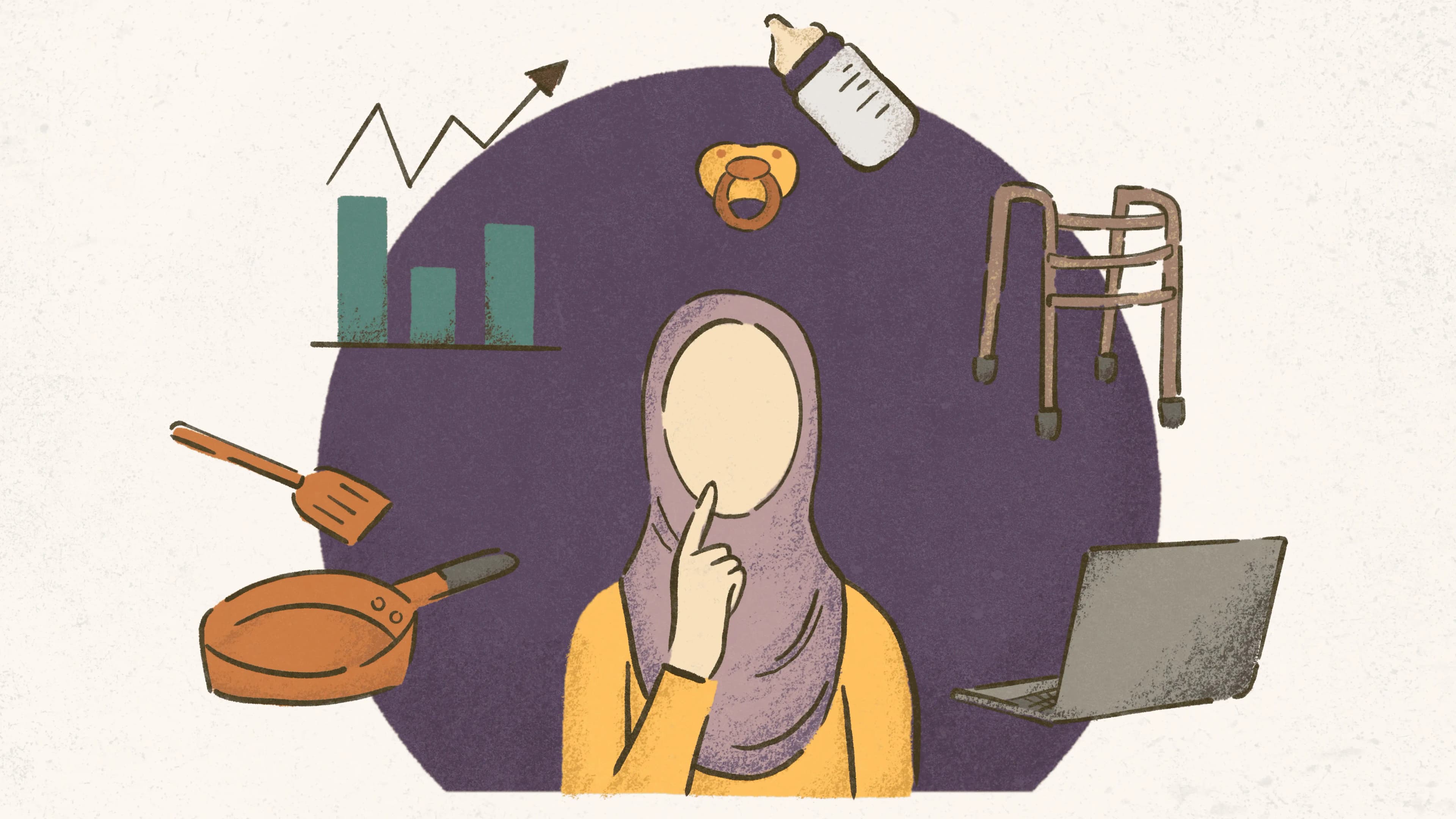
Levelling the Playing Field: A Collective Ecosystem for Malay/Muslim Mobility
Sabariah Aris
31 Jul 2026
10 min read
Singapore’s Malay/Muslim community has made meaningful progress across education, employment and civic life. Today, more families are seeing their children attain higher qualifications, enter professional pathways and pursue futures that were less accessible to earlier generations. These gains reflect the resilience of families, the commitment of community institutions, and the collective aspirations of a community that continues to progress with purpose and confidence.
Yet progress is not always linear, nor evenly experienced. The Centre for Research on Islamic and Malay Affairs (RIMA)’s latest study on intergenerational mobility within the Malay community reminds us that education alone does not automatically translate into sustained social and economic mobility1. Qualifications may open doors, but social capital — access to mentors, professional networks, trusted guidance, and timely information and opportunities, often influences how confidently individuals are able to walk through those doors.
National data reflects both progress and persistent gaps. Census 2020 showed that Malay households had a lower median monthly household income from work at $5,704, compared with the national median of $7,744. Larger average household sizes within the Malay community also meant income was spread across more members, with median income per household member at $1,594, compared with the national median of $2,4632.
These figures should not be read as a lack of effort or aspiration. Rather, they point to structural realities within the Malay community including larger or extended households, fewer financial buffers, concentration in lower-paying roles, limited accumulated assets, and less intergenerational wealth. When compounded by weaker access to professional networks, mentorship, and high-growth sectors, these factors can make upward social mobility more difficult to achieve and sustain across generations.
References
1.Miller, R., binte Hardy, S., & Liaquat, A. (2026). Intergenerational Mobility Within the Malay Community in Singapore. Centre for Research in Islamic and Malay Affairs (RIMA).[]
This is why the conversation on social mobility must move beyond individual motivation alone. A young woman who is the first in her family to enter a professional field may have the ambition and qualifications, but not necessarily the same access to networks, industry knowledge or informal guidance as her peers. A single mother rebuilding her life after divorce may have the will to progress, but not the time, childcare support or stable work conditions to do so. A caregiver who has left employment to care for a child, parent or spouse may find re-entry into the workforce difficult despite her capabilities.
For PPIS’ Research & Engagement Department (RED), these insights resonate deeply with what Muslim women have shared through our own research and engagements. In 2022, our Aspirations of Singapore Muslim Women research found that while Muslim women held strong and wide-ranging aspirations, their top career aspiration was work-life balance or flexible work arrangements4. Yet family responsibilities and limited job flexibility remained key barriers, reflecting the persistent tension between professional aspirations, and caregiving realities.
PPIS RED's 2025 focus group discussions with 30 Muslim women further affirmed this pattern across diverse life stages—from early to mid-career women, married working mothers and single mothers, to caregivers, older women and retirees. While priorities evolved over the life course, the tension between personal aspirations and responsibilities to others remained a defining feature of their lived experiences. Women consistently described negotiating their aspirations alongside family and caregiving responsibilities, financial pressures, and gendered social expectations to be primary caregivers, place family before self, balance multiple responsibilities without compromise, and quietly persevere through personal sacrifice5.
For early to mid-career women, this may manifest as feelings of guilt for wanting more, or pressure to calibrate their ambitions in light of anticipated family responsibilities and prevailing expectations around balancing career and family life. For married working mothers, it is the exhaustion of juggling multiple responsibilities while remaining visible at work. For single mothers, it is the pressure of rebuilding their lives while protecting their children from disruption. For caregivers, it is the reality of placing one’s own life on hold. For older women, it may be the delayed rediscovery of self after decades of service to others.
These insights affirm that the issue is not a lack of aspiration. Many Muslim women are ambitious, capable and resilient. The deeper challenge is whether the broader ecosystem (including workplaces, family support structures, community norms, and institutional policies) around them enables aspirations to translate into sustained mobility.
Caregiving is central to the issue of mobility. Traditional societal norms that place the burden of caregiving solely on women is believed to affect their ability to upskill, remain in employment, pursue career progression, build networks, and step into leadership spaces. For many Muslim women, caregiving is often influenced by cultural and religious ideals of service, sacrifice and responsibility — values that can be deeply meaningful and empowering. However, when these values are not matched by shared responsibility and structural support, they may end up carrying the burden quietly.
Many women do not lack strength; what they often lack is the access to infrastructure to sustain progress. This includes accessible childcare, flexible work, peer support, financial guidance, mentoring, career navigation, and employers who understand that caregiving should not be treated as a professional liability. Without such formal support, women continue to rely heavily on informal support, personal endurance and short-term relief. PPIS RED’s qualitative findings echo this, showing that women across life stages require emotional, practical and financial support, but access remains uneven. This is especially acute for single mothers, caregivers and women from lower-income backgrounds.
Studies have shown that many women develop leadership skills, like learned resourcefulness, through adversities and vulnerable situations6. Instead, these women are seen as recipients of aid rather than those with leadership potential.This framing must change. Women who have navigated divorce, caregiving, financial uncertainty, employment disruption or household instability often possess resilience, resourcefulness, empathy, and strong decision-making skills. These are leadership qualities. What they require is not only support to cope, but structured pathways to grow.
At the same time, the Malay/Muslim community must guard against a deficit lens. Data should not be used to stigmatise the community or reinforce stereotypes7. However, avoiding difficult findings does not serve them either. The community must be prepared to engage honestly with the realities reflected in the data — whether they relate to household income, social capital, caregiving burdens, workplace barriers, wealth accumulation or underrepresentation - and respond with strategy rather than defensiveness.
Going beyond stigma means asking better questions. Not “what is wrong with the community?”, but “what conditions are needed for more people to progress?” Not “why are women not stepping up?”, but “what barriers prevent women and families from accessing the same networks, confidence and leadership pathways as others?”
At its heart, this piece argues for a levelled playing field; recognising that some individuals and families begin with fewer networks, smaller financial buffers, heavier caregiving responsibilities, less exposure to professional pathways and fewer visible role models. If we want social mobility to be meaningful, our systems must ensure that no one is left behind simply because they lack access to the right information, mentor, employer or support at the right time.
Representation is part of this infrastructure. Imposter syndrome is not simply an individual confidence issue; it is often shaped by environments where women do not see enough people like themselves in leadership, boardrooms, professional networks and public platforms. When Malay/Muslim women are visible in these spaces, leadership becomes imaginable. Representation tells women and girls that there is space for them here.
This is where male allyship also matters. Men in families, workplaces, religious institutions, boards, professional networks and community organisations can help open doors by sharing caregiving, recommending women for opportunities, mentoring younger professionals, supporting flexible work without stigma and normalising women’s participation in decision-making spaces. Allyship is not about speaking for women. It is about helping to create the conditions where women can speak, lead and contribute fully.
Women’s leadership and role-modelling must therefore be treated as mobility infrastructure. Mentorship, sponsorship, peer circles and visible leadership pathways are not “soft” interventions. They build confidence, open networks, transfer tacit knowledge and help women navigate spaces that may otherwise feel inaccessible. RIMA’s findings on social capital reinforce this point: mobility is strengthened not only by qualifications, but also by relationships, information and trust.
Addressing these challenges requires a whole-of-community approach. The Malay/Muslim ecosystem already comprises committed organisations, professionals, faith-based institutions, social service agencies, youth groups, women’s organisations, employers and funders. What is needed now is greater synergy: shared data, shared outcomes, complementary roles, and intentional collaboration.
Several areas require collective attention. First, care must be treated as shared social infrastructure, not a private burden carried quietly by women. Families, employers and community institutions all have a part to play in normalising shared caregiving.
Second, workplaces must better reflect the lived realities of Muslim women. Flexible work should enable progression, not quietly sideline women from advancement. Religious accommodation, such as prayer spaces and halal food considerations, should also be seen as part of respectful inclusion.
Third, the community must invest more deliberately in social capital. Mentorship, role-modelling, and professional networks help shape aspirations, build confidence, and open doors to progress.
Fourth, vulnerable women must be seen through the lens of potential. Support must be designed around real-life constraints, including childcare, transport, confidence gaps, digital access, financial stress, and caregiving schedules. If programmes assume that all women have the same time, networks and flexibility, they will unintentionally exclude those who are furthest from opportunity.
This is not a women-only agenda. Social mobility is a family and community agenda. When women are supported to progress, households become more stable, children grow up with broader models of possibility, and men are not left to carry the pressures of provision alone.
The next phase of community progress must therefore be collective. We need to move from programmes to pathways, from short-term support to sustained mobility, and from siloed goodwill to coordinated impact. This does not mean every organisation must do the same thing. It means each partner must understand where it adds value, how it complements others, and how shared efforts can produce greater outcomes for the community.
While Muslim women’s aspirations have remained constant, society must re-examine women’s roles to bring about the right forms of support that meet their evolving needs. If support remains fragmented, short-term or crisis-oriented, women will continue to carry the burden of resilience alone. But when support is integrated with mentoring, caregiving infrastructure, inclusive workplaces, financial empowerment, role-modelling, male allyship and intentional leadership pathways, it becomes a lever for social mobility.
The goal is not only to help Malay/Muslim women cope with competing responsibilities, but to enable women and families to grow, contribute and be represented in the spaces where decisions are made. For the Malay/Muslim community, the task ahead is not to be limited by stigma or deficit narratives, but to act on evidence, organise our strengths, level the playing field and co-create solutions with purpose.
Only then can aspiration become mobility, and mobility become collective progress where no one is left behind.
About the Author
Ms Sabariah Aris is Deputy Director and Head of PPIS’ Research and Engagement Department (RED), its advocacy arm. She oversees research, advocacy, engagement and RED Space, advancing women’s growth and holistic wellbeing. She brings over 20 years’ experience in communications, public affairs, stakeholder engagement, strategic partnerships, events and project coordination across the public and private sectors.
5.Singapore Muslim Women’s Association (PPIS). (2025). Addressing the Needs of Muslim Women in Singapore: Exploring Aspirations, Trade-offs, and Resilience in Everyday Life: A Qualitative Report on Muslim Women in Singapore. [Unpublished internal report].[]
6.Harris, A., Ismail, N., Jones, M., Azorín, C., & Longville, J. (2024). Invisible leaders? Reviewing contemporary evidence about women leaders in education. School Leadership & Management, 44(5), 523–546.[]
7.Hui, J. (2025). Media Representation of Minorities and its Impact on Public Perception in Singapore. International Journal of Sociology, 9(1), 51-63.[]
Levelling the Playing Field: A Collective Ecosystem for Malay/Muslim Mobility | Karyawan