Each society has an element of difference that is more important to them than others. For Singapore, it is race. Much of our lives are governed by the legal categories of the Chinese, Malay, Indian and Other (CMIO) model. It is listed on our Singaporean Identification Cards (ICs) and it determines where we can buy our homes, and influences our access to various cultural communities based on our mother tongue. History has shown us that navigating differences in society relies on its ability to find commonality. For Singapore, this commonality has been the multiculturalism rooted in our national identity1, multiculturalism within the parameters of CMIO model, which has served its purpose and given Singapore a way to navigate the diversity of our population. Recent IPS studies showed that nearly two-thirds of respondents believed Singapore has high or very high levels of racial harmony, and over 90% of respondents were accepting of colleagues from different racial backgrounds. However, with global migration on the rise and rapidly changing2, the CMIO model may not fully account for the increasingly complex intersections of race, nationality and language in our society today3. If racial harmony is a way for us to navigate one of the most impactful elements of difference in Singapore, its applicability is integral to a cohesive social fabric.
The task, then, is to reimagine racial harmony so that it includes local identities that transcend the traditional CMIO model. Moving towards a more inclusive understanding of ‘Singaporean-ness’ strengthens the possibility of fostering meaningful ties between the diverse identities and experiences that make up Singapore society today. This shift can only happen if people from different communities can engage and connect with each other. One of the means to bridge cultural and spatial gaps like this is art: a universal medium for human connection that lets us express and reconstruct our identities by partaking in the lives of others.
This article will turn to the work of Malay auteur and composer Tan Sri P. Ramlee as evidence of this. The Malay identity has a long history with evolving definitions of race and nativity as the region reshaped into the states we know today6. His art gave Malay Singaporeans the space to visualise their new places in an increasingly diverse Singapore, whilst also forging a commonality with audiences of other ethnicities through memory-making7. The plurality of identity and belonging in his films can give us a reference to understand and adapt our own relationship to race and identity. Doing so may just allow us to reimagine racial harmony.
The need to reimagine racial harmony can be contextualised by considering its current state in Singaporean society. The ethnic and cultural differences among Singaporeans who fall under CMIO model have been largely mediated by the use of English as a lingua franca and the practice of established social norms. However, as immigrant communities from diverse backgrounds adjust to life in Singapore, these shared commonalities may not be immediately present. In such contexts, differences between cultural communities may become more apparent, necessitating the expansion of Singaporeans’ idea of what a Singaporean truly is in order to bridge that gap. This process succeeds only when a culture is willing to stretch its own definition of belonging, and the Malay identity in Singapore offers one such example.
Rather than being rooted in something permanent such as phenotype or lineage, Malay culture exists in permanent flux – adapting and emphasising the individual’s relationship to the community around them8. For instance, a proximity to and proficiency in the Malay language could lead to someone’s identification (and social acceptance) as a Malay person9. This reflects Singapore’s official definition of ‘Malay’, which is someone who has been accepted by the community, regardless of their background10. The culture’s historical openness to the influence of surrounding cultures resulted in the formation of identities that are plural, overlapping and nuanced – much like those in Singaporean society today. One such example is the existence of Peranakan Indian and Chinese communities, in which the integration and exchange with Malay natives produced hybridised practices that represent elements of both cultures. The transformative capacity of Malay-ness contributes to its survival, proving that cultural preservation and adaptation are not contradictory11.
The principles underlying this flexible practice puts into perspective the heart of being in a community. When we resist change to our national heritage merely to maintain familiarity, does it preserve our heritage or prevent it from growing? Malay identity’s plurality grew from its willingness to stay open to new ways of life without abandoning its own. Situated in the context of reimagining racial harmony, Malay openness serves as one reference for how the reconstruction of identities to account for societal changes can be a vehicle for greater cohesion and integration across identities.
"Malay openness" by itself is a vague concept to apply actionably. Understanding what it looks like in practice is where we turn to the arts, as identity shifts are "closely related to the fields of aesthetics and art-making" in cosmopolitan cities like Singapore12. The rapid pace of life and global connections makes identity a constantly evolving and fluid form of self-expression as people constantly adapt their relation to the world around them. This adaptation relies on visual, sensory and emotional means to be understood13. Fiction can translate the intangibility of identity into something that can be seen and interacted with, producing a safe space where audiences can reimagine foundations of their identity with agency. They become co-builders of a fictional world, interpreting the artist’s creation through their unique lens shaped by their individual positionalities.
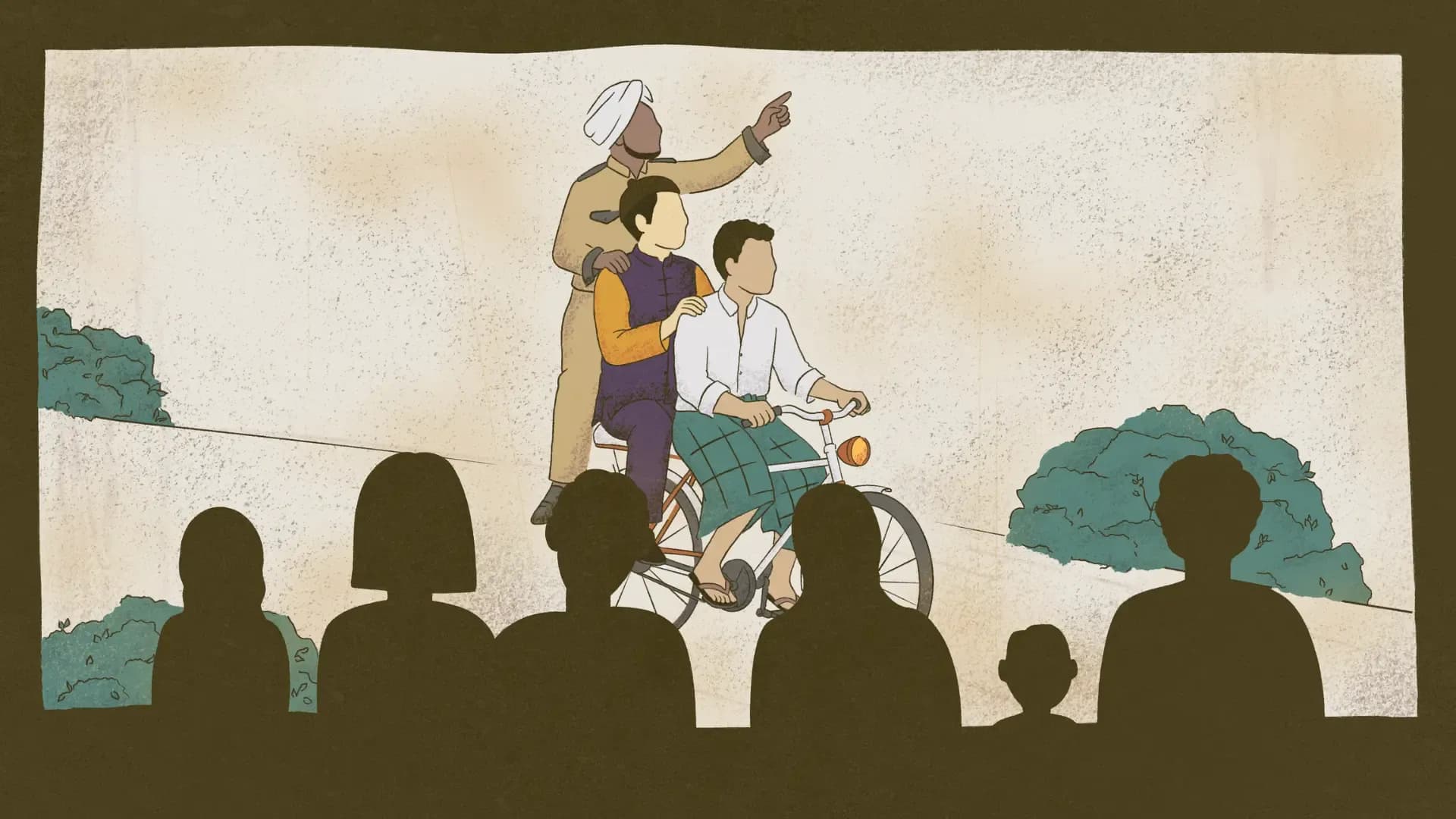
In the context of this article, a film that reimagines Singaporean society as one which perceives local racial identities beyond the CMIO model would give audiences the tools to situate themselves in it – be it through reflecting about their resistance to the expansion of local identities, or by creating positive self-identifications to a more diverse country. For example, P. Ramlee’s depiction of Malay identities and its changes in a decolonising and evolving national landscape utilised both means to address and soothe the necessity of change14. In Penarek Becha, he criticises the feudal mentality of successful Malays who looked down on those who recently moved from their kampongs (villages) to the city15. Depicting the protagonist as a poor but morally upright character victimised by wealthy antagonists, he compels audiences to reflect on the superficiality of judging people on the basis of material success. Empathy towards the character’s plight appeals to audiences’ ethos, illustrating the negative moral consequences of sowing arbitrary discord amongst themselves.
In Labu-Labi, the representation of diverse characters visualised the multicultural cosmopolitanism of 1950s and 60s Singapore16. Meanwhile, the depiction of inter-race relations in films such as Sesudah Suboh and Gerimis and the unique hybridity of each identity depicted through accents in Ali Baba acknowledged and naturalised the presence of immigrant communities as part of his imagined Singapore. At a time where colonialism still physically separated racial communities, cinemas became a vehicle for access to different communities and the development of positive identifications17.
From President Tharman Shanmugaratnam to composer Julian Wong, recent anecdotes about the impact of P. Ramlee’s art reflect its multicultural appeal and unifying quality18. Wong’s re-composition of P. Ramlee’s most famous songs was recently brought back for a second sold-out instalment by the theatre company, Wild Rice. Illustrating the universality of art, he told the Straits Times that his lack of proficiency in Malay did not affect how much he was moved by P. Ramlee’s music and films19. The aesthetic appeal of it was reason enough for him to develop a strong positive relation with the works. Despite the centrality of Malay life in P. Ramlee’s films, art's fictional nature meant it carried no expectations or hierarchies that may accompany racial identities in everyday life. Audiences of every race could situate themselves within it, whether as a participatory audience imagining a truly diverse fabric of Singapore or through the positive memories they built around it. In this sense, art can foster racial harmony by cultivating appreciation and communal ties across racial groups without requiring individuals to diminish their own racial identities. Over time, this increased familiarity and shared identification canmay blur racial lines, allowing greater cross-cultural interactions to reflect a true societal integration.
Similar to the zeitgeist nature of P. Ramlee’s works, art that reflects the challenges of diversity in Singapore today has the capacity to build a similar sense of commonality and positive self-identification between communities. Where the CMIO model offers a rigid structure for identities to take shape in, art’s offer of a fictional society with more fluid characterisations can generate the same common memory amongst Singaporeans in the way P. Ramlee’s films once did. If the struggle of racial harmony lies in how Singapore’s structure for understanding our differences is no longer compatible with our reality, the hope is that art can transcend the linguistic, cultural and spatial gap between those who exist within this structure and those that remain in the periphery.
Ultimately, differences in society can be a great source of beauty but also difficulty. As our homes and lives change to reflect the increasing connectivity of the world, it is important that we begin moving from a semi-tolerant coexistence towards true integration so that all those who call Singapore home may actually experience the belonging and comfort of being ‘home’. Benedict Anderson once described the experience of living in cities with a strong immigrant presence as ‘walking amidst strangers’, but surely, ‘strangers’ may also become our very own, and we find ourselves surrounded by home wherever we go. Working within the scope of our current experiences points to the urgency of finding commonalities that continue to honour our differences. Through imagined worlds, art allows us to meet each other in the middle, produce common memories and re-negotiate the foundations of our identities. If we pursue and encourage the production of art that seeks to recognise the true cultural wealth of Singapore, we might just find ourselves in a home truly rooted in a unified and cohesive community.