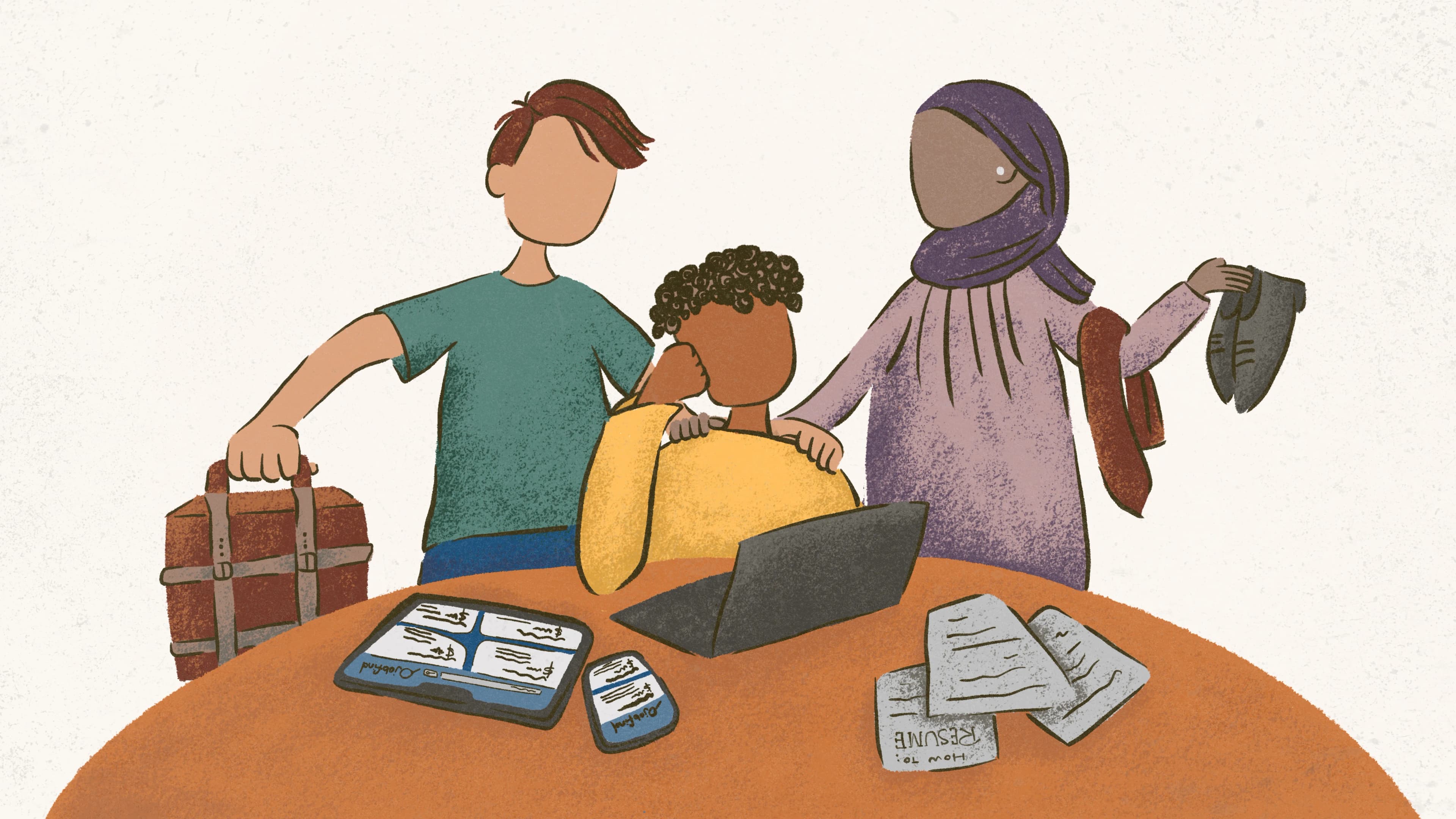
The Hidden Curriculum of Work: The Role of Parents in Shaping Work-Ready Young Adults
Aishah Mohd Said
30 Sept 2026
10 min read
My twin 6-year-old girls are transiting to primary school next year, and I have been feeling jittery about their level of readiness. While one of them can read fluently, her sister is still lacking fluency and needs more practice. I have spent hours deliberating between sending her for reading classes or working on it with her myself.
Then, a recent webinar held by their preschool teachers on the transition to Primary 1 made me realise that there is more to school readiness than just reading ability, from managing money during recess and keeping track of time to noting down homework instructions and finding their way around a new environment. Have I even prepared them to know when and how to get help when they need it?
As parents, we tend to define readiness by their technical competencies and academic skills. However, true readiness involves skills and behaviours that are less visible but equally important to help them thrive in new and ever-changing environments.
This made me wonder if we make the same mistake when preparing young people for work.
The Hidden Curriculum of Work
For our students at ITE to thrive and progress towards employment, lifelong learning and independent living, we place emphasis on developing technical competencies and industry-relevant skills. While work readiness skills are woven into the academic curriculum, it is during internships that these different skill sets truly come together. The authentic environment of the working world will allow them to experience, practise and develop skills relevant to the hidden curriculum of work.
Hidden curriculum describes the informal learning that takes place alongside the formal academic curriculum as students learn to navigate the social organisation of school life. Applying this concept to the workplace, the hidden curriculum of work can refer to the unwritten expectations, norms, behaviours and social practices that young people need to understand in order to function effectively in the workplace. Examples include:
References
1.Jackson, P. W. (1968). Life in classrooms. New York: Holt, Rinehart and Winston.[]
1
how to approach a supervisor
how to interpret feedback
when and who to ask questions
how to respond when you have made a mistake
workplace etiquette
knowing when to take initiative
understanding organisational culture
When I was preparing my children for primary school, I was focusing on their academic competencies and kept asking myself, “Can she do the task?”, when I should have shifted my focus to the implicit expectations of school and asked, “Can she navigate the environment in which the task needs to be done?”
Parents as Reflection Partners
While supervisors, lecturers and, when relevant, job coaches are available to support students through the hidden curriculum of work, families also play an important role in the transition from school to work. Parents can help them develop these work readiness skills even before they begin any internship and help them make sense of their experience during as well as after the internship. As parents, we do not have to have all the answers. What we can do is to help our children interpret the experience, consider different perspectives and decide what to do next.
Do they really know themselves?
A few years ago, I had a student, Jim, who was very unhappy in his course. He had applied for design courses but was unsuccessful and was instead posted to an engineering course. He would come and see me every week, telling me how unhappy he was in the course and how he did not even know what his lecturers were talking about in class. When I spoke to his mum about this and explored options, she said that she did not want him to just give up when things got tough. She added that he did not really know what he wanted and even if he got into the design course, he would still be unhappy.
With support, Jim did well and was able to cross over to a design course for Higher Nitec. As his mum anticipated, he was still unhappy!
Often, we have students telling us that they chose a course of study because of their interest. They will say that they want to enrol in a design course as they love to draw. However, they may not see that having a passion in drawing is not the only requirement for a career in design work. There are other elements such as tailoring their drawings or designs to what the client wants and accepting negative feedback on their creative creations.
Thus, parents should start engaging with their child from an early age to explore the expectations and realities of different jobs, even before they are due to head to Institutes of Higher Learning (IHLs). In our information-rich world now, it is very convenient to find out more about what a job really entails so that students can make an informed decision when selecting courses. At ITE, parents and students are supported through the readily available course information online, campus tours, and education and career coaching to make informed choices and explore suitable pathways.
As parents, let us move away from just asking our children, “What do you want to study?”
Instead, let us ask:
What gives you energy?
What drains you?
Do you enjoy working with people?
Do you like routines?
Do you prefer solving problems independently?
By asking these questions, we are guiding them to reflect on the type of working environment they prefer, for example, working with customers, handling machines with fixed routines or troubleshooting at a helpdesk.
It is all in the questions
As parents, we are also models to our children in our values and perspectives towards work. I remember how my mother would always share stories about what happened at her workplace and how she approached tricky situations. Without me realising it, I was learning about social practices in the workplace. When I started working and shared about my workplace experiences, she would ask questions that prompted me to think about the situation and the next steps I should take. Parents can shape attitudes towards work through everyday conversations.
As learning support specialists to our students in ITE, it is very important for us to ask the right questions. Generic questions like, “How was the interview?” or “How is your internship going?” will just receive answers like, “Fine” or “It’s OK.” We need to ask questions that would encourage them to think.
Some questions I ask my students are:
“What was the most difficult question they asked during the interview?”
“Looks like you had a good day. What did you enjoy today?”
“Looks like you had a tough day. What was making you uncomfortable?”
“What did you do when you weren't sure?
“What would you do differently next time?”
These questions shift the focus from outcomes to growth, helping young adults understand that setbacks and mistakes are normal parts of career development and sharpen their observation skills.
Resist to rescue!
Last year, I met with Tim, a student who was highly anxious about speaking in public. He would communicate with me by typing. He would often ask me to approach his lecturers with questions on his behalf or pass messages to them. I would politely refuse and tell him that he needs to learn to do it himself. What I could do was to help him form the questions or vet his message. He did get agitated at times, wondering why I would not help him. I explained to him that these are very good opportunities for him to sharpen his communication skills and I was giving him the scaffolding to do so. While it would have been easier at that moment for me to just do it for him, in the long run, he would be missing out on building his communication skills, be it verbally or through text.
Often, we see our children struggling and we want to just jump in to make it better. Instead of thinking “I need to fix this”, we should consider how we can guide them through the situation, supporting them while they work through the problem rather than solving it for them. This way, we are helping them develop self-advocacy, perspective-taking and problem-solving skills.
Celebrate growth
It is always easier to highlight tangible achievements like a good grade for internship, a positive testimonial from the supervisor or a job offer from the internship company. However, for most of our students, growth in the hidden curriculum skills may be incremental and difficult to measure.
Stella was a student in a business course where a lot of emphasis is placed on customer service and client engagement. However, she had a fear of public speaking and presentations. Whenever she had a presentation, she would rehearse with me many times so that she could feel more prepared. When she first joined ITE, her lecturer made special arrangements for her to do her presentations without her class present to reduce her anxiety. By the end of her first year, she managed to conduct a presentation to her whole class of over 30 students. When she did her internship in her second year, she texted me to say that she completed a presentation for a group of 15 clients but was disappointed that she forgot some of her lines. I told her that I was proud of her as she had grown so much, from being able to only present to an empty room to presenting to a group of clients. While there would always be room for improvement, it was important for her to stop and reflect on her development. She agreed and acknowledged that she had come a long way from when she first started at ITE.
Becoming more confident speaking to other adults and learning to accept feedback constructively are excellent examples of growth and development for students. In fact, making small discoveries about themselves is also growth, like realising that they like interacting with customers and that a frontline job would suit them best.
To help identify growth, it is best to stay away from generic compliments like, “Well done!” or “Good job!”. It would be more helpful to explicitly state the growth you have observed. No matter how small it may be, incremental growth should be celebrated.
In conclusion, preparing young people for work does not begin on their first day of internship or employment. While they have been equipping themselves with technical skills and may be able to perform the tasks well, we also need to help them be prepared to navigate the workplace environment, including the unwritten expectations, norms, behaviours and social practices.
The hidden curriculum is particularly challenging because not everyone can naturally pick up implicit expectations just by observing others. As parents, we may not always know the answers, but we can help make the invisible visible by encouraging our young adults to reflect on their experiences, recognise the expectations around them and work out how to navigate them. Work readiness is a shared endeavour, and families have a valuable role that is sometimes overlooked.
Note: All names of students have been changed to respect their privacy
About the Author
Aishah Mohd Said is a Learning Support Specialist at ITE College Central and has more than 20 years of experience working with students with a wide range of disabilities.
The Hidden Curriculum of Work: The Role of Parents in Shaping Work-Ready Young Adults | Karyawan