Expectations of marriage are often influenced by a combination of individual aspirations, cultural norms, and religious values. Religious guidelines on spousal roles in Muslim marriages are designed to protect the rights of both husbands and wives, but can often be misunderstood when taught in isolation from Islamic ethics and principles. Considering the evolving lived realities of Muslim couples, this article examines how Islamic principles of reciprocity, mutual responsibility, and consultation can provide a meaningful framework for negotiating marital roles while remaining faithful to the ethical objectives of marriage in Islam.
Today, there is a continued perception that spousal roles are a fixed set of rules, causing a disconnect between personal expectations in Muslim marriages and changing social norms1. In fact, one of the commonly cited verses of the Qurʾan when discussing the need to fulfil one’s marital responsibility as ascribed by Islam is Qurʾan 4:34, where Allah says:
“Men are the caretakers of women, as men have been provisioned by Allah over women and tasked with supporting them financially. And righteous women are devoutly obedient and, when alone, protective of what Allah has entrusted them with. And if you sense ill-conduct from your women, advise them ˹first˺, ˹if they persist,˺ do not share their beds, ˹but if they still persist,˺ then discipline them ˹gently˺. But if they change their ways, do not be unjust to them. Surely Allah is Most High, All-Great.”2
A textualist or literal understanding of this verse emphasises a husband’s financial and familial responsibilities, as well as wifely obedience, among other things. While the division of labour in Muslim marriages was once and can continue to be straightforward in single-income households, the same cannot be said when discussing spousal roles in dual-income households. In such contexts, the interpretation and application of Qurʾan 4:34 are shaped by broader Qurʾanic principles, as well as by the spouses’ circumstances and family needs.
In Singapore, discussions among religious institutions and scholars continue to explore how Islamic teachings on spousal roles may be understood and applied in light of the evolving lived realities of Muslim couples, particularly within changing social and economic contexts5. Several asatizah (religious teachers) have emphasised how traditional gender roles have evolved in today’s contemporary society, which includes the fact that a husband may not be the sole breadwinner of his family, and a wife may not be home to manage the household and caregiving duties full-time6. At the same time, religious teachings continue to highlight the husband’s responsibility for financial maintenance and leadership, while emphasising the wife’s nurturing role within the family7.
Consequently, members of the Muslim community in Singapore are exposed to the multiplicity of religious interpretations that shape their understanding of what marriage entails. Rahman (2021), for example, observes that more traditional understandings of women’s roles continue to feature prominently within segments of the local religious discourse8 . Likewise, the evolving needs of Muslim families have highlighted the importance of regularly reviewing the content and narratives conveyed in Muslim Pre-Marriage Courses (PMCs) to ensure they remain relevant and responsive to contemporary realities9. These discussions reflect broader conversations within the community on how Islamic injunctions governing spousal roles and marital duties may be interpreted and applied amidst evolving socioeconomic contexts and lived realities.
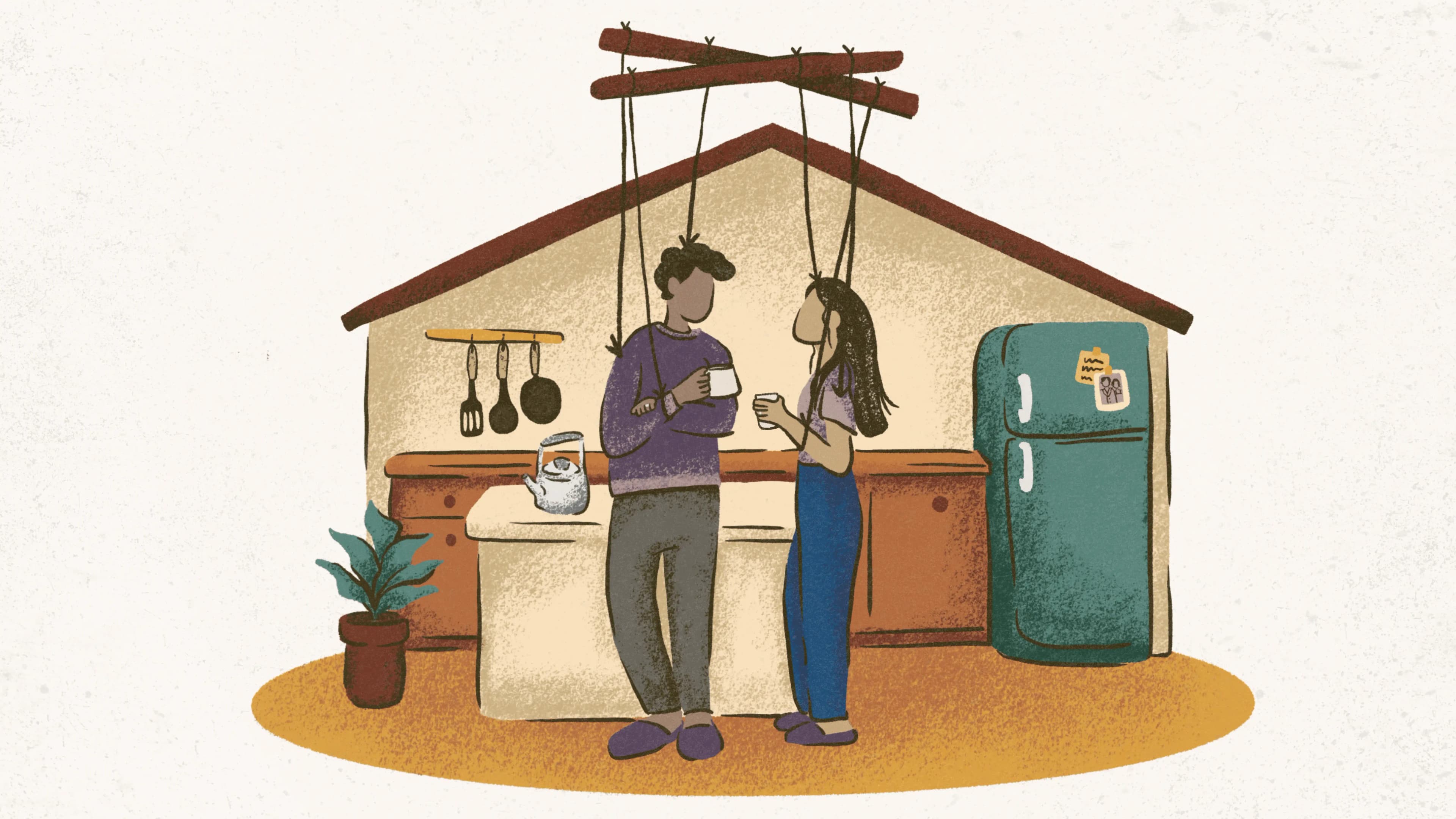
Amid such ongoing debates and diverse perspectives, this article argues that the prominent issue actually involves married individuals who seek marital privileges while refusing to let go of the freedom they enjoyed before marriage. In other words, regardless of the Qurʾanic understanding one subscribes to, an issue lies in the trap of becoming a single-minded spouse. This refers to an individual who is legally married yet maintains the psychological and/or behavioural patterns of an unmarried, single person. Ultimately, problems arise when there is a fundamental disconnect between the individual’s marital status and marital behaviour, leading to marital conflict and resentment.
One of the key transitions into marriage is the shift from individual autonomy to shared responsibility – with some seeing individual autonomy as a perk of being single. While there is a general expectation that this decision-making autonomy will have to change upon marriage, problems arise when either or both spouses continue to approach marriage with the expectation of retaining the same level of unilateral decision-making they enjoyed before marriage. This can manifest in various aspects of one’s marital life and experience, from financial arrangements to household and caregiving responsibilities. Two brief examples illustrate this tension.
The first example involves a husband who desires a traditional wife to handle household chores, while benefiting from having a spouse who earns her own income and therefore does not rely on him financially. This may allow him to retain much of the financial autonomy he enjoyed before marriage while expecting his wife to absorb a greater share of the household’s financial responsibilities. While he expects, or even demands, that his wife contribute financially, he resists sharing domestic tasks and/or caregiving responsibilities. His resistance may stem from either his belief in selected gendered roles or from weaponised incompetence.
In a domestic setting, weaponised incompetence involves individuals who pretend to be incapable of certain tasks by deliberately underperforming to avoid responsibility or even shift tasks to others10. When it comes to marital relationships, it may involve husbands who avoid domestic roles like cooking and cleaning, as well as caregiving duties like looking after their own children at home or bringing them out on their own. However, it is important to note at this juncture that weaponised incompetence is not limited to husbands, as it is not in any way gender specific.
Another example involves a wife who desires a traditional husband to provide financially for the family while also enjoying the benefits of modern husbands who are more involved and hands-on with household chores. As in the previous example, this may stem from a selected understanding of gendered roles in which men are responsible for earning income for the family. A position sometimes articulated in public discussions of Muslim marriage and childrearing is that,
“Some scholars are of the opinion that wives are not obliged to perform household chores including tasks such as cleaning, cooking, and sewing. Should the wives choose to do so, these tasks are carried out of their own free will.”11
While this position highlights important protections afforded to women within Islamic tradition, tensions may arise when spouses invoke rights in ways that are disconnected from the practical realities and reciprocal responsibilities of marriage within contemporary family life.
The principles of reciprocity and mutual responsibility are evident in many religious injunctions and Qurʾanic guidelines, including Qurʾan 4:34. Issues emerge when religious injunctions are interpreted or applied in ways that place greater emphasis on particular rights, disregarding the reciprocal responsibilities owed to one’s spouse. In the contemporary context, where dual-income households enable women to contribute to household income, the practical application of traditional divisions of labour may differ across households, particularly in dual-income families. It is therefore important for both men and women to identify how they can collectively negotiate how marital responsibilities are fulfilled – whether financial, domestic, or emotional – while respecting individual agency wherever possible and necessary.
While there is much to unpack in the two examples above, important questions that could be derived are: what do these married individuals do with their money, time and energy, if not for the marital and family institutions they have chosen to enter or build with their spouses? Secondly, if men require women to play a supporting role in fulfilling the financial needs of their households, is it fair for husbands to expect their wives to handle unpaid domestic duties on their own? Finally, if women want a say in the division of labour in their households or the lifestyle they lead, is it fair for them to expect their husbands to shoulder the financial burden in full? These are important questions because healthy marriages require spouses to balance individual aspirations with the reciprocal commitments that accompany marriage, rather than selectively embracing aspects of marriage that align with their personal interests and preferences.
Hafiza Roslee is a PhD candidate in Islamic studies at the Asia Institute, Faculty of Arts, University of Melbourne (Australia). Before pursuing her doctoral degree, she served as a researcher in the Office of the Mufti at the Islamic Religious Council of Singapore.